- Copy the website’s current snippet from Website settings → Installation.
- Add it once in the shared document or site-wide layout, rather than mounting a fresh script in every route component.
- Publish the site and open an eligible route directly. Then navigate to another route through the app without a full reload.
- Test included and excluded path rules after both navigation types. Onvocado observes History API changes and popstate; if your custom router needs an explicit page notification, use the supported page command.
Back to help center
Getting started & installation
Install Onvocado on a single-page website
Install once and test client-side route changes, page rules and submissions.
1 min read Reviewed Nov 10, 2026
01 Follow these steps
02 Optional page notification
window.onvocado?.push({ type: "page" });Call this after the new page content and URL are ready. Do not replace the website snippet with this command, and do not repeatedly initialize the SDK.
03 Check the result
Complete a valid signup after a client-side navigation and find it in Leads. Check that the recorded page path is the expected route. Use display limits and troubleshooting if an earlier display or dismissal prevents a repeat test.
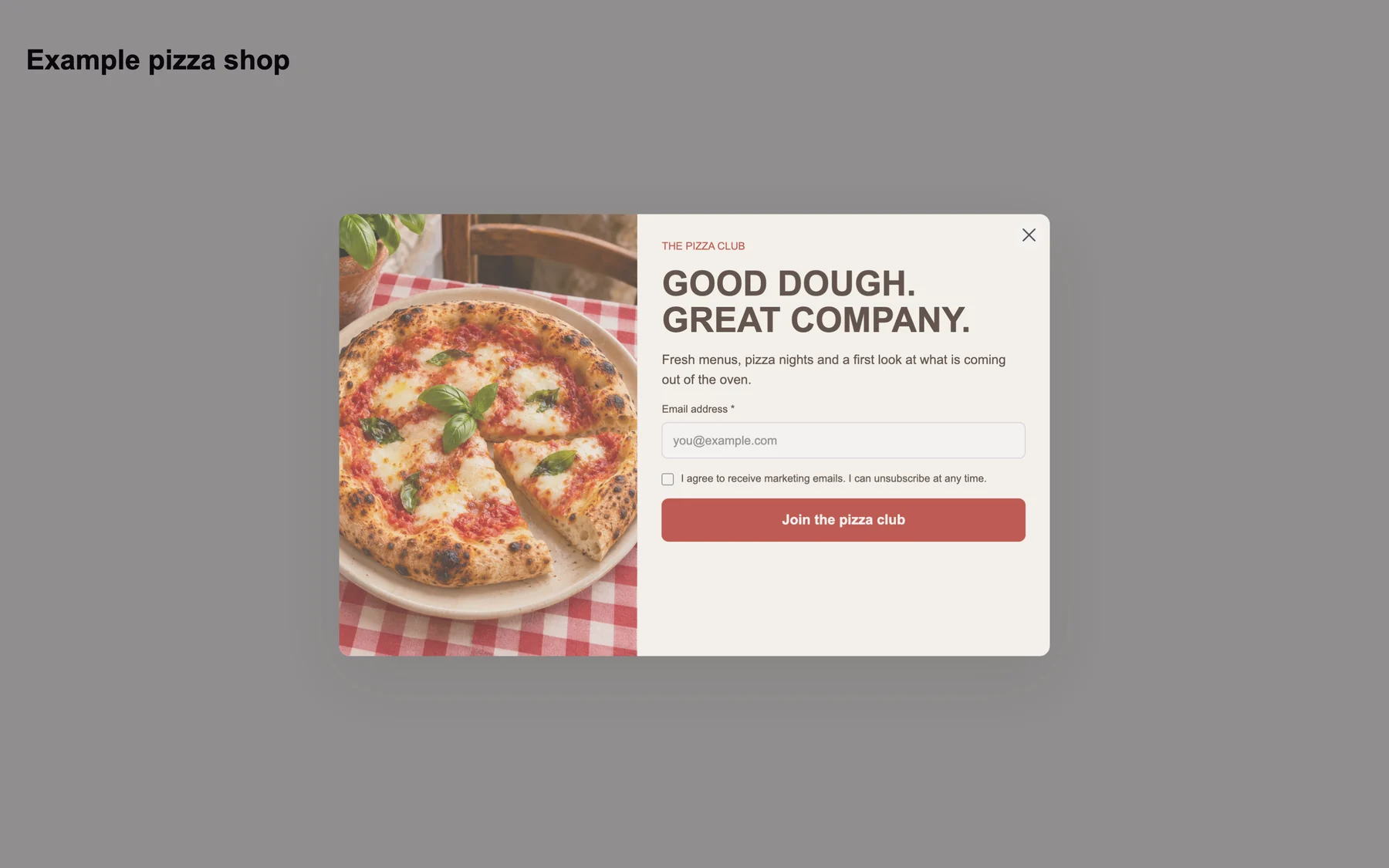
04 What the current app looks like
Was this article helpful?
Related articles
Launch your first Onvocado popup
Choose a template, review it, set targeting and verify a real signup.
Read article
Install Onvocado on your website
Copy the correct website snippet, check installation reports and test a published popup.
Read article
Install Onvocado on WordPress
Add the current website snippet with a code insertion method supported by your WordPress site.
Read article
Didn't find what you need?
Our team is one message away. Expect a reply within a business day.
Contact support